 Opinion · Euroglobal New
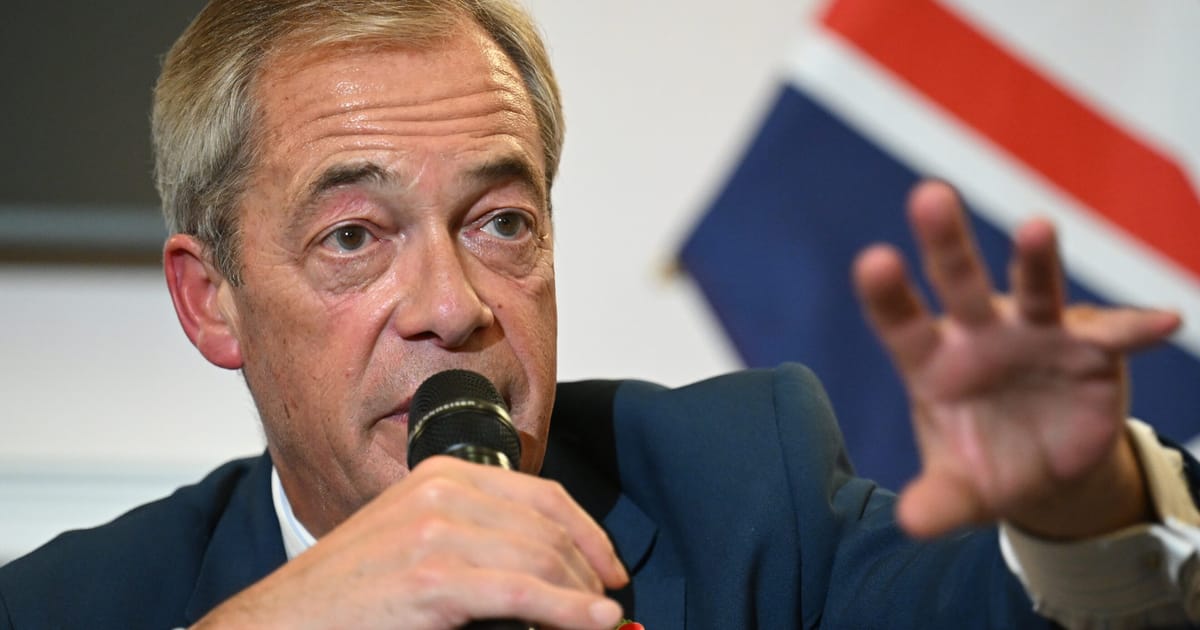
News Defense Reform UK unveiled its dedicated spokesperson for the armed forces on Thursday. Leader of Reform UK Nigel Farage attends a press conference at The Clermont London Hotel on November 2, 2026. | Ben Montgomery/Getty Images November 5, 2026 11:02 am CET LONDON — Defense and worries about Russia rank among the top concerns of British voters, but Reform UK has spent more than two years without a dedicated spokesperson and still has no detailed military policy. Without that, the right-wing party is on the back foot on policy to deter Moscow and has lacked a compelling alternative to the defense spending surge that is one of the Labour government's biggest priorities.
It has also encountered difficulties reaching out to the arms industry. Now, Reform is moving to correct that. On Thursday, the party announced Angus MacIntyre as its new defense spokesperson.
He will help the party develop a defense policy ahead of the next election. “We want to come into government with a comprehensive program that we can deliver to the machine, rather than have a flimsy manifesto with a few headline commitments and ask them to work out how to deliver it,” a senior party official told POLITICO. Like others in this article, they were granted anonymity to discuss policy issues.
MacIntyre served in the military for 40 years and retired as a wing commander in the Royal Air Force last week to take up the role. "Having someone of Angus’ stature and calibre speak for us on defence shows how seriously Reform UK takes protecting the interests of Britain’s military," party leader Nigel Farage said ahead of the announcement. MacIntyre blamed successive Conservative and Labour governments for underfunding the military.
"Neither can be trusted. Only Reform UK can fix and rebuild our armed forces," he said in the statement. But the announcement comes more than two years after the last election.
Since then, the party surged in opinion polls , leading for many months before recently falling behind Labour after Andy Burnham became prime minister. Senior party officials blamed the delay in setting out a defense policy on a desire to “get it right,” rather than put out piecemeal ideas which could be attacked by political opponents. Farage's Kremlin problem The U.K.'s ongoing defense buildup is aimed at deterring Russia, which has created problems for Farage.
He has been haunted by comments made in 2014, when he said he “admired” Russian President Vladimir Putin as an “operator.” Farage has tried to distance himself from such statements by calling Putin “a very bad dude” and saying the U.K. should shoot down Russian jets in British airspace. However, any attempt to put the party on a solidly pro-Ukraine footing has been mixed: he called Kyiv “corrupt” and has promised to review Britain’s military aid to Ukraine. One British defense industry representative said Farage’s comments on Ukraine were unhelpful.
“A lot of money for the defense industry does come from contracts with Ukraine, and it’s also that moral thing with the defense industry — they want to support Ukraine.” Farage's lack of success in distancing himself from his past pro-Putin and pro-Russia comments puts him at odds with many U.K. voters. A YouGov poll last month found that Russia was by far the biggest threat for British voters, easily outpacing out-of-control AI. Sophia Gaston, a British foreign policy researcher who wrote a report to be published Thursday on public attitudes to defense, said 83% of Reform backers favored more defense spending, higher than for any other party.
“While there has been a lot of attention on Nigel Farage’s somewhat mixed feelings towards Ukraine and NATO more generally, he must tread a careful line as that does not necessarily reflect the views of his voters, of whom 92% regard Russia as a threat to global peace," she said. “All in all, Reform voters remain Eurosceptic, Atlanticist, hawkish towards authoritarian nations, and in favour of a more defensive state," said Gaston. The policies Reform does have on defense are mainly skewed toward its core voter concerns — cracking down on immigration and boosting benefits for armed forces personnel.
These include calls to deploy the Royal Navy to combat small-boat crossings in the Channel, ending diversity initiatives in the armed forces and cadets, granting the armed forces immunity from prosecution for actions taken in combat operations and giving priority to veterans for social housing. Reform backs increasing defense spending to 3% of GDP by 2030 and NATO's 3.5% target by 2035 — in line with the governing Labour Party. It says it would pay for the higher spending through £45 billion of cuts to other areas such as welfare.
While the party is still developing a comprehensive defense policy, Reform MP Danny Kruger this summer called for the U.K. to "become a great power once again." He also spelled out the importance of NATO, defending the U.K. and a stronger response to Russian hybrid interference. "That means moving from a regional heavyweight to being the leading economic, technological, diplomatic and security power in Europe," he said . He also called for "a total reform of procurement," including possibly removing it from the Ministry of Defence.
Industry struggling to engage The lack of a defense spokesperson has made it difficult for industry to engage with Reform. “They don’t have any defense policy, and they’re therefore not asking any questions, and have no person to engage with,” said the defense industry representative. "Their only policy really on defense is: 'Well, we want to spend more money, and we’re not going to tell you what and when, and also we want to get the woke out of the military.'” Another defense sector representative underlined the negative signal sent by the party's delay in appointing someone to oversee the issue.
“There has been nothing significant on defense which, in addition to a lack of defense spokesperson, is baffling given the geopolitical environment we are facing," they said. Following MacIntyre's appointment, the party will now look to publish detailed policy documents on defense, as it has done in recent months on topics such as immigration and the economy. Reform plans to build out its foreign policy team over the next year, said a senior Reform adviser.
Source: politico.eu