 Opinion · Euroglobal New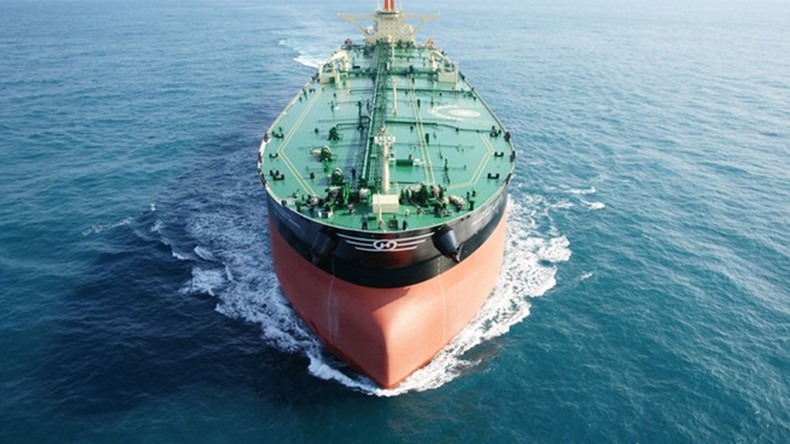
Home Energy Energy-General Cyril Widdershoven Cyril Widdershoven is a senior maritime, energy, and geopolitical analyst and Senior Advisor at Blue Water Strategy, specialising in the strategic intersection of shipping, ports,... More Info Set us as your preferred Google source Premium Content By Cyril Widdershoven - Sep 19, 2026, 6:00 PM CDT XRG is reportedly considering buying up to 50% of $3-billion Energos Infrastructure. Shipowners are simultaneously ordering VLCCs at a record pace, with 164–217 orders estimated in 2026 and more than $20 billion being committed to long-haul crude transportation.
Both bets reflect a shift toward energy security and control of physical flows, as chokepoint disruptions and longer trade routes increase the strategic value of tankers. Global maritime and energy markets are currently showing two significant developments. Both indicate they should not be treated as separate market stories, but as an intertwined sector.
Abu Dhabi’s ADNOC investment arm, XRG, is reportedly considering acquiring up to 50% of Energos Infrastructure, a floating-LNG company valued at around $3 billion. At the same time, shipowners have ordered more VLCCs in 2026 than in any comparable period for at least the last 25 years. One transaction is about gas infrastructure; the other is about crude transportation.
However, together they expose the same strategic reality: geopolitical fragmentation, chokepoint insecurity, and the redrawing of energy trade routes are triggering a global race to own the ships, terminals, and floating infrastructure needed to control physical energy flows, raising concerns about supply stability and market resilience for stakeholders. No, it doesn’t mean that the energy transition has disappeared. It only makes clear that it is no longer setting the investment tempo.
Security of supply is. At present, Apollo Global Management seems to be exploring strategic options for Energos. The latter includes a full or partial sale.
XRG is slated to be among the prospective bidders, trying to acquire as much as half of the company. Energos operates 13 floating LNG assets, including floating storage and regasification units and LNG carriers deployed under long-term arrangements in Brazil, Egypt, Indonesia, Mexico and the Netherlands. Neither XRG, Apollo nor Energos has formally confirmed a transaction yet.
The discussions are still to be treated as preliminary. The logic and strategy behind it are, however, clear. Energy, according to Reuters, could be even looking at a valuation above $3 billion.
There is an important technical distinction, as it is not simply a potential purchase of floating LNG production plants. The target is primarily a floating storage, regasification and LNG-shipping platform. For companies such as ADNOC, this will maybe even more strategically valuable because floating regasification infrastructure offers rapid deployment and flexibility, enabling quicker responses to supply disruptions.
Liquefaction projects create supply at fixed locations, while floating regasification infrastructure not only determines where LNG can enter a market, but also how swiftly an importing country can adapt to geopolitical or operational disruptions, enhancing energy security and market stability. As has been seen directly after the Russian invasion of Ukraine, an FSRU can transform a coastal location into an LNG import gateway much faster than a major land-based terminal. Looking at the current post-Ukraine, post-Hormuz, and increasingly post-Bab el-Mandeb security environment, this speed and flexibility carry, and will be for a long time, a very high premium.
Floating infrastructure allows capacity to be repositioned, contracted to governments and utilities, or redeployed when regional price differentials and security requirements change. It is not merely a collection of vessels. It is a portfolio of mobile strategic access points.
Development Current scale Strategic meaning Principal risk Possible XRG–Energos transaction Up to 50% of a business reportedly valued above $3 billion Gives XRG exposure to floating LNG import capacity, shipping and long-term infrastructure contracts High valuation, asset availability and political exposure across host markets Energos operating platform 13 LNG vessels, including FSRUs and LNG carriers Immediate access to operating assets rather than waiting for scarce newbuild slots Contract concentration, conversion costs and technical differentiation between vessels XRG LNG ambition Targeting a global LNG portfolio of roughly 25 mtpa by 2035 Builds an integrated gas position across production, liquefaction, shipping and market access Execution risk across multiple continents and projects 2026 VLCC contracting Estimates range from 164 to 217 orders, depending on methodology Historic commitment to long-haul crude flows and fleet renewal Severe delivery clustering and eventual overcapacity Estimated VLCC investment More than $20 billion Shipowners are monetizing geopolitical dislocation and persistent oil demand. Newbuilding prices could lock in weak future returns. Crude-tanker orderbook Around 130 million dwt, approximately 27% of the operating fleet Largest orderbook on record by deadweight, with deliveries extending toward 2030 Freight-rate collapse if ton-mile demand normalizes Aging VLCC fleet Roughly 20% more than 20 years old Supports replacement demand and sanctions-driven fleet segmentation Older vessels may remain active longer than expected, delaying scrapping The ADNOC/XRG interest clearly fits into a much larger pattern.
The company has expanded its position in the Rio Grande LNG development in Texas, securing exposure across all five planned trains, and has entered Argentina’s emerging LNG chain through upstream interests in Vaca Muerta alongside Eni and YPF. At the same time, it already holds exposure to Mozambique’s LNG resources and floating liquefaction infrastructure. XRG’s ambition is to build a global gas and LNG portfolio with capacity of approximately 25 million tons per year by 2035.
Its additional investment in Rio Grande LNG illustrates that this is already an acquisition program rather than a corporate aspiration. A potential acquisition of Energos would fill a critical gap. Given XRG’s assembly of upstream gas, liquefaction capacity, and long-term LNG market positions, adding floating import and regasification assets would set up the downstream maritime bridge.
For Abu Dhabi, or ADNOC, this would mean participating across almost the entire LNG chain: molecule ownership, liquefaction, transportation, regasification, and potentially access to the end customer. In a fragmented LNG market, owning flexible import infrastructure offers owners the option to redirect capacity towards countries prioritizing security, opening new strategic opportunities for investors and policymakers. The same conclusion is driving the VLCC market into far more dangerous territory.
Data providers do not agree on the exact number because they apply different rules to options, letters of intent and firm contracts. Signal Group data cited by Reuters put 2026 VLCC orders at 217, compared with 93 in 2025. Allied Shipbroking counted 164 against 83.
Whichever methodology is used, this is an extraordinary ordering wave worth more than $20 billion. A VLCC can carry around two million barrels of crude, meaning owners are committing capital to hundreds of millions of barrels of additional transportation capacity. This surge could lead to oversupply, potentially depressing freight rates if demand does not keep pace, which stakeholders need to monitor closely.
BIMCO data already shows that the wider crude-tanker orderbook has reached approximately 130 million deadweight tons, equal to about 27% of the existing fleet and the highest absolute volume recorded. Deliveries are stretching towards 2030, transforming what began as overdue fleet renewal into a structural bet on sustained long-distance oil trading. For the shipping market, the rationale is powerful, given the disruption around Hormuz and the Red Sea.
Both have reduced effective vessel availability, driven insurance and security costs sharply higher, and forced buyers to look further afield. The global oil market’s main clients, Asian refiners, now desperately need optional access to crude from the United States, Brazil, Guyana, West Africa, and eventually Argentina. Replacing a Gulf-to-Asia barrel with an Atlantic-to-Asia barrel dramatically increases ton-mile demand.
The world does not have to consume more oil for tanker demand to rise. Each barrel merely has to travel further. The bet for shippers is not on explosive oil-demand growth, but on inefficient energy geography.
The VLCC surge is not irrational exuberance. Approximately one-fifth of the existing VLCC fleet is more than 20 years old. Environmental rules, vetting requirements and mechanical deterioration should gradually push part of that capacity out of first-tier trading.
At the same time, sanctioned and shadow fleets have also divided the nominal global fleet into increasingly separate markets. However, owners are moving from justified replacement into speculative saturation. Orders placed today will arrive after the immediate freight-rate shock may have subsided.
If Hormuz reopens fully, Red Sea security improves, and Middle Eastern exports return to normal, effective vessel supply could return quickly, just as record new tonnage enters service. Older ships may not be scrapped at the rate conventional models assume, especially while sanctioned trades remain profitable. The result could be a brutal freight correction between 2028 and 2030.
For shipping, however, this is not new. The difference today is the unprecedented geopolitical justification being used to support the investment cycle. Shipowners clearly believe the world has entered a permanent era of longer routes, divided fleets, and recurring chokepoint disruption.
The industrial consequences will be significant. Chinese and South Korean yards will gain further pricing power, while engine manufacturers, equipment suppliers and classification societies face growing order backlogs. Shipyard capacity allocated to VLCCs cannot simultaneously build LNG carriers, container ships, naval auxiliaries or floating energy infrastructure.
XRG’s interest in acquiring an existing fleet therefore reflects not just speed, but scarcity. Buying operational floating LNG assets avoids waiting years for specialized newbuild slots. The current moves made by ADNOC, especially in maritime, are no longer isolated shipping investments.
They are building a sovereign-controlled logistics shield. The expansion is intended to strengthen control over the supply chain during regional disruption. The strategic line connecting ADNOC L&S and XRG is therefore clear: Abu Dhabi is moving beyond owning reserves and production capacity.
It wants control over export vessels, LNG projects, floating import assets, trading optionality and customer access. This is vertical integration redesigned for a world in which chokepoints can close, charter markets can seize up, and governments can commandeer infrastructure in the name of national security. There is one hard conclusion emerging from both markets.
Capital is being deployed on the assumption that geopolitical disruption is structural, energy trade will become less efficient, and physical transportation capacity will command a growing security premium. Floating LNG assets offer flexibility; VLCCs offer range and scale; integrated ownership offers control. ADNOC/XRG is clearly positioning for a world where energy sovereignty belongs not only to the countries producing oil and gas, but to the players owning the maritime system through which those molecules must pass.
By Cyril Widdershoven for Oilprice.com More Top Reads From Oilprice.com Oil Prices Head for Weekly Loss as Saudi Export Fears Ease Germany Weighs Market Incentives to Boost Record Low Gas Storage Level TTF Gas Hits $92.95 as Gulf Tensions Weigh on Energy Markets Download The Free Oilprice App Today Back to homepage Cyril Widdershoven Cyril Widdershoven is a senior maritime, energy, and geopolitical analyst and Senior Advisor at Blue Water Strategy, specialising in the strategic intersection of shipping, ports,... More Info Leave a comment EXXON Mobil -0.35 Open 57.81 Trading Vol. 6.96M Previous Vol. 241.7B BUY 57.15 Sell 57.00